

Description
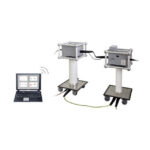
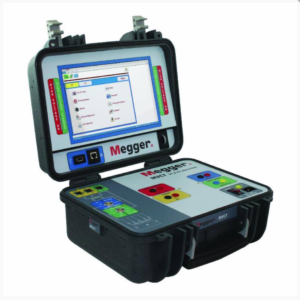
RIVmeter is an instrument for the measurement of radio influence voltage (RIV) according to the relevant standards (IEC CISPR 18-2:2010, NEMA 107-1987, ANSI 63-2-1996, VDE 876, DIN EN 55016-1-1). The instrument has a bandwidth of 9 kHz and a tunable center frequency of 10 kHz to 10 MHz (crystal controlled synthesizer). Technically, the RIVmeter is a selective μV-meter. However, the meter reading is weighted according to the CISPR weighting curve, whereas the repetition rate has a strong impact on the reading. The RIVmeter is an ideal instrument to replace outdated RIV measurement instruments in a transformer testing lab, for instance.RIVmeter is a double super-heterodyne receiver acting as narrow-band filter. This narrow-band detection allows staying away from external RF noise e. g. in non-shielded laboratories by varying the center frequency of the filter.
Two factors determine the RIV in μV: the transferred charge and the repetition rate of the PD impulse (number of PD pulses per second). Because of this processing, a direct translation of the measured RIV values (μV) into values of apparent charge in pC is in general not possible. Historically, the RIV technique is based on measurement receivers to estimate the disturbance of communication lines. Thus, properties of those instruments then being available became part of the NEMA standards. However, both the 9 kHz bandwidth and the CISPR weighting curve put emphasis on some type partial discharge activity, while they tend hiding others.The calibration of the RIV measurement is done using an RIV calibrator, injecting a sine wave of typically 100 μV into the bushing. The multiplexer of the RIVmeter is used to conveniently determine the correction factor according to NEMA 107-1987 and other standards.



Reviews
There are no reviews yet.