
Description
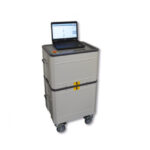
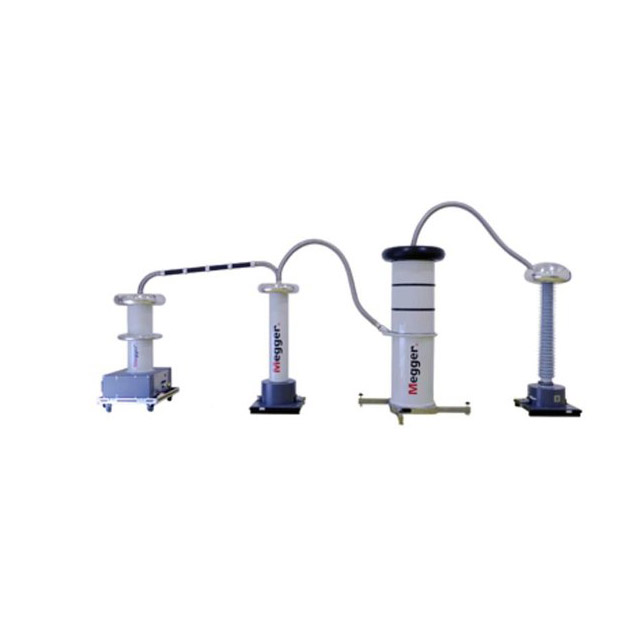
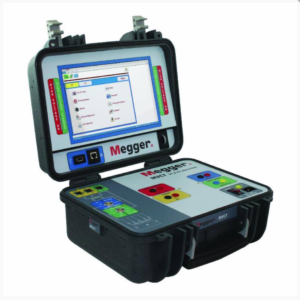
HV DAC series which is designed for after-laying testing on newly installed HV-cables as part of quality control, and for condition assessment on repaired or service-aged HV-cables.The key benefit of this test set is the compactness versus testable capacity. With this transportable unit, cables with a length up to 32 km can be tested. In addition set-up within a substation is also no problem; no more roadblocks needed compared to using resonance test sets on large trucks. As of its portability and short set-up time it is possible to quickly respond on changing weather conditions. Because of its low weight there are no special requirements needed for road conditions. Air transport is also no problem, keeping transport times to a minimum and maximising the efficiency in use of the system.
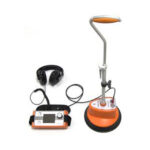
The test set incorporates a partial discharge (PD) detector, allowing monitoring the quality of workmanship and the condition of the cable. The PD measurement system is state of the art with live evaluation, localization and display of results. Maintenance activities can be directly planned during the actual measurement. All data is stored in a powerful cable data base, where data can be easily accessed again, and reports printed.
Overview of HV DAC 300
■ Designed for testing and diagnostics on cables rated up to 230 kV
■ Multifunctional: cable withstand testing & PD Diagnosis in a single system
■ Allows a monitored commissioning test acc. to IEC 62067 and IEEE 400.4
■ Highly adaptable thanks to the portable design
Stages of Testing
Manufacturing :Testing done with 50Hz power source/Impulse.
On Field :Installation Testing and Acceptance Testing
In Service Life : After Repair, as Maintenance Test.
Today’s practices for commissioning testing on EHV cables
HV DAC testing with PD-measurement:The HV DAC testing has, based on its advantages, won on popularity. The frequency of the test voltage is depending on the cable length between 20 and 300Hz.All available DAC test systems are equipped with a PD Detector.
HV DAC Technology
- Test and diagnosis described by IEEE 400.4
- Voltage range accordingly to IEC 60840 and HD S3 632 2017 standards.
- Possible to test and diagnose 66kV – 220kV cable range
- Suitable for condition assessment of any cable type
- Trusted technology and IEC 60270 PD detection inc. TDR localization
Cable Sheath Integrity mandatory Testing Test while commissioning of EHV Cables
To determine the healthiness of Cable Sheath after installation. Method: Application of 10KV DC on sheath with respect to ground for a duration of 60sec. Leakage current is monitored and it should be within allowed limits.
Proof Test/ Withstand test. Purpose
- To check the healthiness of cable insulation, Joints and terminations according to IEC 62067 and IEEE400.4
- Method: IEEE 400.4 field guide specifies Damped Alternating Current or DAC as a very effective test technique to ensure the integrity of cable insulation.
- Total 50 DAC excitation are applied on each phase. Frequency of the DAC ranges between (20Hz to 500Hz)
Partial Discharge Measurement Purpose To check the quality/workmanship of cable insulation, Joints and Termination and to identify weak spots to repair it before energizing. Partial Discharge measurements are carried out by applying DAC voltage according to Partial Discharge measurements are carried out by applying DAC voltage according to technique and IEEE400.3
For the decision making process the measurement data is the most important part: PDIV vs PDEV
PDIV (Partial Discharge Inception Voltage)
In general: the lower the PDIV is, the more critical the PD affected spot should be considered • For PILC: PDIV has to be monitored over time – PDIV remains constant: good sign – PDIV decreases: sign of ageing
PDEV (Partial Discharge Extinction Voltage)
Only of importance if PDIV > U0 • If PDEV < U0, then there is a high chance that the PD is always present at operating voltage



Reviews
There are no reviews yet.