

Description
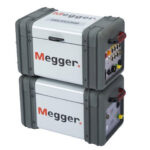
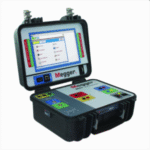
Sweep frequency response analyzer-SFRA
Power transformers are among the most critical components in today’s transmission and distribution infrastructure.
Unexpected transformer failures can lead to significant financial losses due to unscheduled maintenance and power outages. Therefore, it is essential to make testing and diagnostics both reliable and efficient to ensure long-term system stability.
Advanced Transformer Diagnostic Solution
Sweep Frequency Response Analysis (SFRA) is a powerful and highly sensitive diagnostic method used to evaluate the mechanical integrity of the transformer core, windings, and clamping structures. By measuring the transformer’s electrical transfer function over a wide frequency range, SFRA detects subtle internal changes that may not be visible through conventional tests. Moreover, this method provides early detection of mechanical issues, reducing unexpected downtime.
The power factor or tan delta test, traditionally performed only at 50 Hz, is a valuable method for assessing the condition of transformer insulation systems. However, this single-frequency approach has limitations. Many of these can be overcome by conducting measurements over a range of frequencies, providing deeper diagnostic insights.
Another lesser-known test, the short-circuit impedance measurement, evaluates winding deformation by analyzing leakage reactance. When performed at several frequencies—typically between 1 Hz and 500 Hz—and focused on the resistive component, it yields valuable diagnostic information known as the Frequency Response of Stray Losses (FRSL) technique.
It’s important not to confuse Dielectric Frequency Response (DFR) or FRSL with Sweep Frequency Response Analysis (SFRA). While SFRA identifies mechanical changes in transformer cores and windings, DFR determines the moisture content in cellulose insulation. Both tests serve different diagnostic purposes.



Reviews
There are no reviews yet.