
Description
Motor Current Signature Analysis (MCSA) is a technique used to determine the operating condition of induction motors without interrupting production. Motor current signature analysis is that it is sensing an electrical signal that contains current components. Motor current signature analyser MCSA detect the faults at an early stage and avoid the damage and complete failure of the motor.
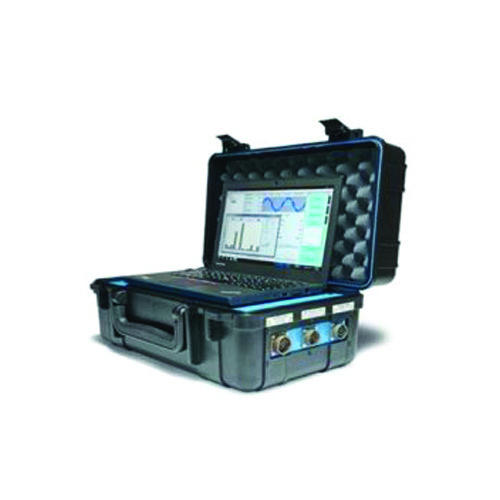
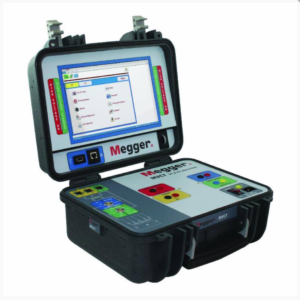
Adiradh Energy offers Megger make Motor current signature analyzer Model Baker EXP4000 powerful tool, designed for site use, to analyse the motor running under its normal load. Motor current signature analsyer MCSA tracks multiple data types to identify trends that indicate potential problems. Voltage and current are measured and a series of parameters are then calculated, including power quality, rotor bar condition, % load, % operating efficiency, average torque value, torque ripple showing variation within process, monitoring of start-up transients (volts, current and torque), and much more.The Motor current signature analsyer EXP4000 enables root-cause analysis, starting with separation of mechanical and electrical issues that may be present in a motor-machine system.
Motor current signature analysis (MCSA) differs from dynamic analysis since only the phase currents are measured. This test method can also be performed with the Motor current signature analyser -MCSA-EXP4000, and can be beneficial when the motor cannot be stopped to gain access to the motor control cabinet and make connections, or there are no voltage transformers present in the panel of an HV motor. Motor current signature analyser (MCSA) is mainly used to detect cracked and broken rotor bars, and various mechanical issues in India ,Hyderabad. Dynamic analysis is always recommended where possible, since the addition of voltage measurement allows power quality assessment to be made. This is important since poor power quality can lead to insulation degradation. MCSA also allows torque to be calculated, which plays a vital role in understanding the condition of the driven load.
- Monitors and assesses conditions across a running “machine system” that impact the health and performance of the motor within the system
- MCSA evaluates the quality of incoming power fed to motor
- Assesses motor performance indicators
- Tracks the amount and condition of load placed on the motor
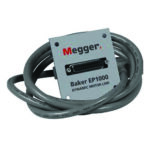
- Instrument connection options: at a motor junction box, at the instrumentation cabinet, inside a motor control cabinet (MCC), from outside an MCC (requires a Baker EP1000 (dynamic motor link))
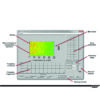
- Baker EXP4000 designed for rugged site use in tight spaces typical of industrial environments
- AC or battery operation
- Visual confirmation of motor integrity
- Facilitates survey of plant-wide motor efficiency
- Microsoft Windows 7 operating system
Motor current signature analyser MCSA detects wide range of problems:
- wrong settings on a supply transformer’s taps, poorly distributed single-phase loads, overloading (saturating) supply transformers, excessive VFDs on low voltage busses, excessive non-harmonic frequencies on a VFD, missing line-inductors on VFD applications and missing or open power factor correction capacitors
- thermal overloading of the motor
- current related problems
- broken rotor bars, mechanical issues, transient overloading, mechanical imbalances along with bearing problems and load issues such as cavitation
Motor current signature analyser Baker EXP4000 acquires data in several testing domains includes
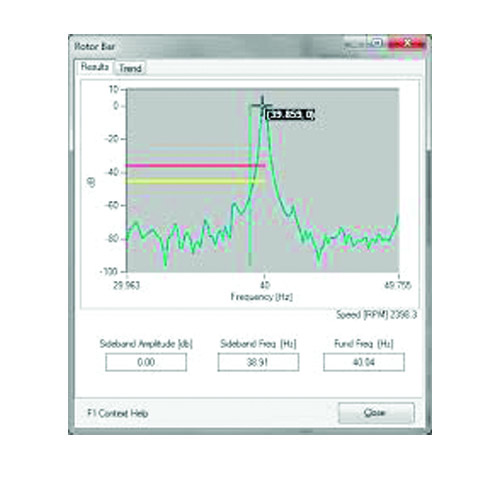
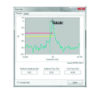
The rotor bar function records the relative amplitude of the rotor-bar sideband, and compares the rotor cage signature to stored thresholds.The rotor bar test evaluates the overall condition of the machine. Broken rotor bars cause excess heat on the machine, decreasing efficiency, shortening insulation life, and possibly causing core damage.
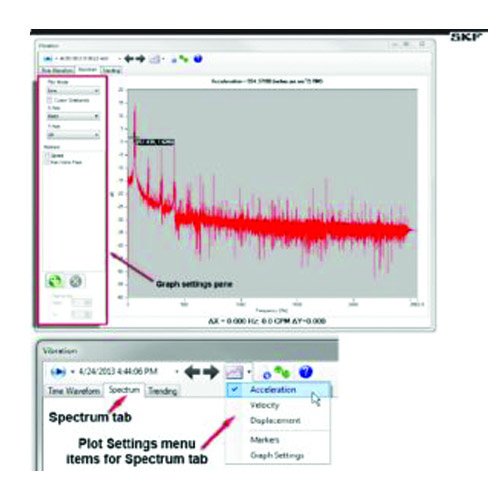
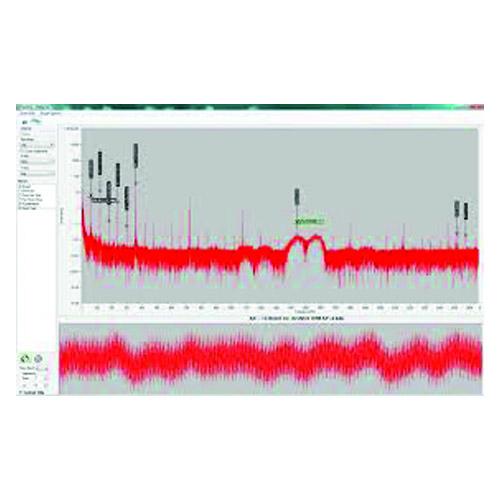
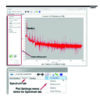
The V/I Spectrum window analyzes the frequency spectra of the three line-to-neutral voltage waveforms and the three line currents independently of each other. The current spectra have shown to contain information related to the vibration spectra of the machine; roller-bearing faults can be identified by using the frequency marker controls on the lower left. The feature can also help you find deteriorating alignment problems, load unbalances, looseness, eccentricity, and cavitation by analyzing these spectra.
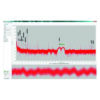
Torque spectrum and time waveform are just two of the EXP4000’s many powerful graphical representations of machine health and performance
Demodulated Spectrum
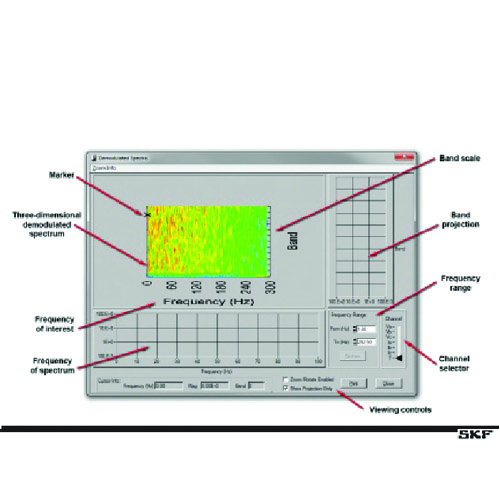
Available with the purchase of the T4000 Torque analysis software option, the Demodulated spectrum feature calculates the three-dimensional demodulated spectrum of the torque signature. With the channel control, this signal can be changed from torque to current or voltage of any one of the phases. The demodulated spectra tool analyzes the dynamic behavior profile of the motor load system.
Demodulated spectrum of the torque signature
Transient startup
VFD monitoring
Efficiency



Reviews
There are no reviews yet.