

Description
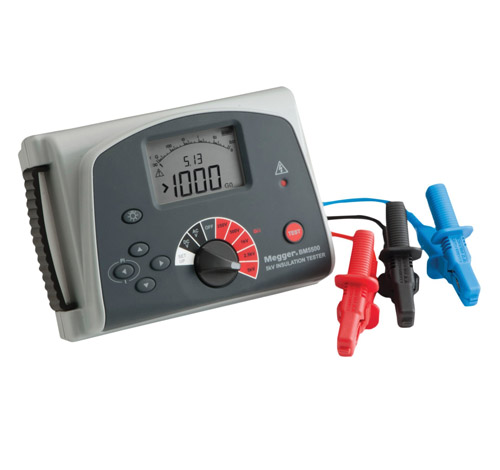
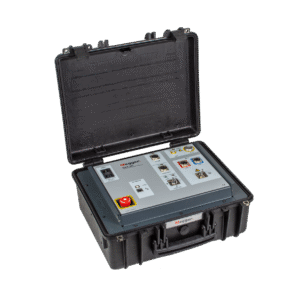
Megger BM5500 5000V Insulation Tester
There are two methods that can assist in evaluating the condition of insulation. The first method involves applying voltage in incremental steps. As the test voltage increases, degraded insulation will exhibit a decreasing insulation resistance (IR) value. To ensure precise results, it is essential to control the dwell time at each voltage step. To facilitate this testing process, an insulation resistance tester should be equipped with the capability to automatically increase the voltage at predetermined intervals. The second assessment method involves comparing current IR readings with those from previous tests. Given that the megohmmeter operates with a very low test current, it does not harm the insulation. Regular IR testing will help identify insulation deterioration over time and highlight the necessity for preventive maintenance. For an accurate comparison, measurements should be taken at the same voltage and dwell time. Since moisture can influence IR readings, it is crucial to conduct tests under consistent temperature and humidity conditions.
Insulation Resistance Testing Parameters
Two key parameters derived from insulation resistance measurements are the dielectric absorption ratio (DAR) and the polarization index (PI). Modern digital megohmmeters are equipped with specific functions to measure and display these parameters. The DAR is calculated by dividing the IR at 60 seconds by the IR at 30 seconds. A value below 1 indicates that resistance is diminishing over time, suggesting a failing device under test (DUT). The polarization index is particularly useful for motors and generators, as it helps evaluate the level of impurities present in the windings and their overall cleanliness. The PI is determined by dividing the IR at 10 minutes by the IR at 1 minute. Certain equipment standards stipulate minimum PI values, with a ratio exceeding 1.5 generally considered satisfactory.



Reviews
There are no reviews yet.